
Control hydrogen blending as pipeline conditions change. The Welker ECOsystem™ Hydrogen Injection System automatically adjusts injection rate for continuous proportional-to-flow hydrogen infusion.
A lower-carbon fuel strategy using existing gas infrastructure.
Hydrogen can be blended with natural gas so the combined fuel can move through existing pipeline infrastructure and be used to generate heat and power with lower environmental impacts than natural gas alone. For utilities, research organizations, and energy-transition projects, blending provides a practical way to evaluate hydrogen within established gas networks.
The opportunity is real. So are the project variables.
Hydrogen blending is not simply a matter of introducing hydrogen into the line. The appropriate blend depends on the pipeline materials and condition, associated infrastructure equipment, and the downstream appliances or processes using the gas.
That makes controlled injection one important part of a broader hydrogen-readiness assessment.
The ECOsystem™ controls proportional-to-flow hydrogen injection. The customer and project team determine the allowable blend, pipeline compatibility, code requirements, and end-use suitability for the specific network.
Have a target hydrogen concentration?
Start with the operating conditions behind it: natural gas flow range, hydrogen supply pressure, required injection range, controls and communications, installation environment, pipeline assessment, and downstream requirements.
No universal blend percentage is stated here because blend limits are project-specific.
Hydrogen blending starts with controlled injection.
The ECOsystem™ Hydrogen Injection System is a skid-mounted automatic hydrogen injection system designed to infuse a customer pipeline with hydrogen proportional to flow. Its controller responds to changing pipeline conditions and adjusts the injection rate to maintain proportional infusion.
Built around the application.
Welker can custom design the ECOsystem™ Hydrogen Injection System to suit your operational needs.
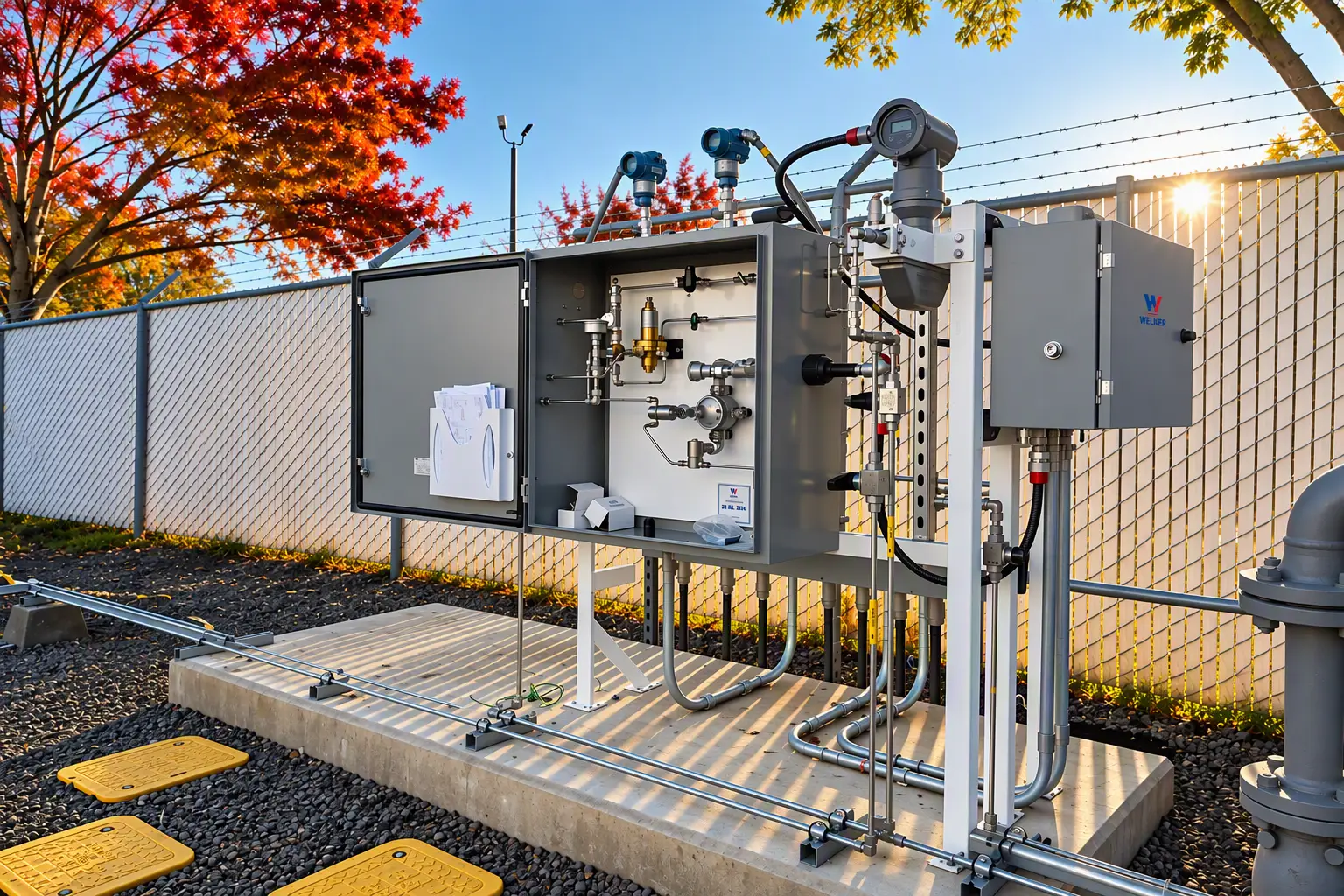
ECOsystem™ Hydrogen Injection System
Plan the Injection Point
Your hydrogen project is more than an injection skid.
The strongest system specification begins with the project conditions that determine how hydrogen must be introduced, controlled, monitored, and supported.
What blend are you trying to achieve?
Define the project target and expected operating envelope. The injection system must respond as pipeline flow changes, while the acceptable blend remains a decision for the customer's engineering and integrity teams.
How much will pipeline flow vary?
Share minimum, normal, and maximum pipeline flow as well as hydrogen supply conditions. The standard ECOsystem™ uses two solenoids to better accommodate varying flow rates and limit interruption during solenoid maintenance.
How will operators monitor performance?
Identify control-system integration, communication, reporting, alarm, and troubleshooting needs. Published ECOsystem™ features include Modbus or Ethernet communication plus time- and date-stamped audit and alarm records backed up to microSD.
What does the installation require?
Consider electrical service, enclosure needs, ambient conditions, hazardous-area requirements, layout, access, maintainability, tie-in conditions, and governing codes. Final requirements belong in the project specification.
The project inputs that help define the right starting point.
Process Conditions
Natural gas flow range, line pressure and temperature, hydrogen supply pressure, desired blend target, and anticipated turndown.
Controls + Data
Natural gas flow range, line pressure and temperature, hydrogen supply pressure, desired blend target, and anticipated turndown.
Site + Installation
Natural gas flow range, line pressure and temperature, hydrogen supply pressure, desired blend target, and anticipated turndown.
These are recommended discovery inputs for a project discussion, not a substitute for the customer's pipeline integrity, safety, regulatory, or end-use assessment.
Control, Visibility, and Reliability in One Injection System
A focused feature set helps operators manage hydrogen injection as pipeline flow changes.
Automatic Proportional-to-Flow Injection
The system adjusts hydrogen injection rate as flow conditions change.
Remote Monitoring
Modbus or Ethernet communication supports off-site monitoring and troubleshooting.
Audit Trail + Alarm History
Time- and date-stamped historical records are backed up to a microSD card.
Injection Gas Filtration
A Welker F-9 Filter removes contaminants from the hydrogen supply.
Operational Redundancy
Two solenoid valves help accommodate varying flow rates and limit interruption during solenoid maintenance.
Few Moving Parts
A simple mechanical architecture supports reduced maintenance requirements.
Three Primary Components.
One Coordinated System.
The ECOsystem™ Hydrogen Injection System centers on the touch screen controller, solenoid cabinet, and hydrogen flow meter.
Touch Screen Controller
Coordinates system operation and communicates with the flow computer and hydrogen flow meter so injection can respond to changing flow conditions.
Solenoid Cabinet
Contains the flow-control solenoids, hydrogen supply regulator, and F-9 filter that conditions the hydrogen supply.
Hydrogen Flow Meter
Provides feedback to the controller to support the proper injection rate.
Continuous response to changing pipeline flow.
01
Receive Flow Information
The controller communicates with the process flow computer.
02
Adjust Injection
As pipeline conditions change, the controller increases or decreases the injection rate.
03
Control Hydrogen Flow
Solenoid valves control hydrogen flow into the pipeline.
04
Verify + Record
The hydrogen flow meter provides feedback, while audit data and alarm history support monitoring and troubleshooting.
Technical Details When You Need Them
Review the IOM for installation, operation, controller navigation, maintenance, troubleshooting references, and the maintenance schedule. Use the data sheet for a concise summary of system features and benefits.
Hydrogen Injection System Questions
Does the ECOsystem™ adjust when pipeline flow changes?
Yes. The controller increases or decreases the injection rate as pipeline conditions change so the system continues infusing hydrogen proportional to flow.
Can the system be monitored remotely?
Yes. Published system information lists remote monitoring and communication using Modbus or Ethernet.
What records does the system retain?
The system provides time- and date-stamped audit data and alarm history, with backup to a microSD card.
Can the system be customized?
Yes, the ECOsystem™ Hydrogen Injection System can be custom designed to suit customer specifications.
What should be reviewed before installation or operation?
The IOM directs users to read the applicable installation, operation, and maintenance manuals and observe governing codes and ordinances. Final installation and operational requirements should be established for the specific application.
Bring Us Your Hydrogen Blending Challenge.
Start with your target blend, hydrogen supply, pipeline flow conditions, control and communication requirements, installation environment, and operating objectives. Welker can configure the ECOsystem™ around the injection requirements of your application.
