Process Fluids Guide · Natural Gas
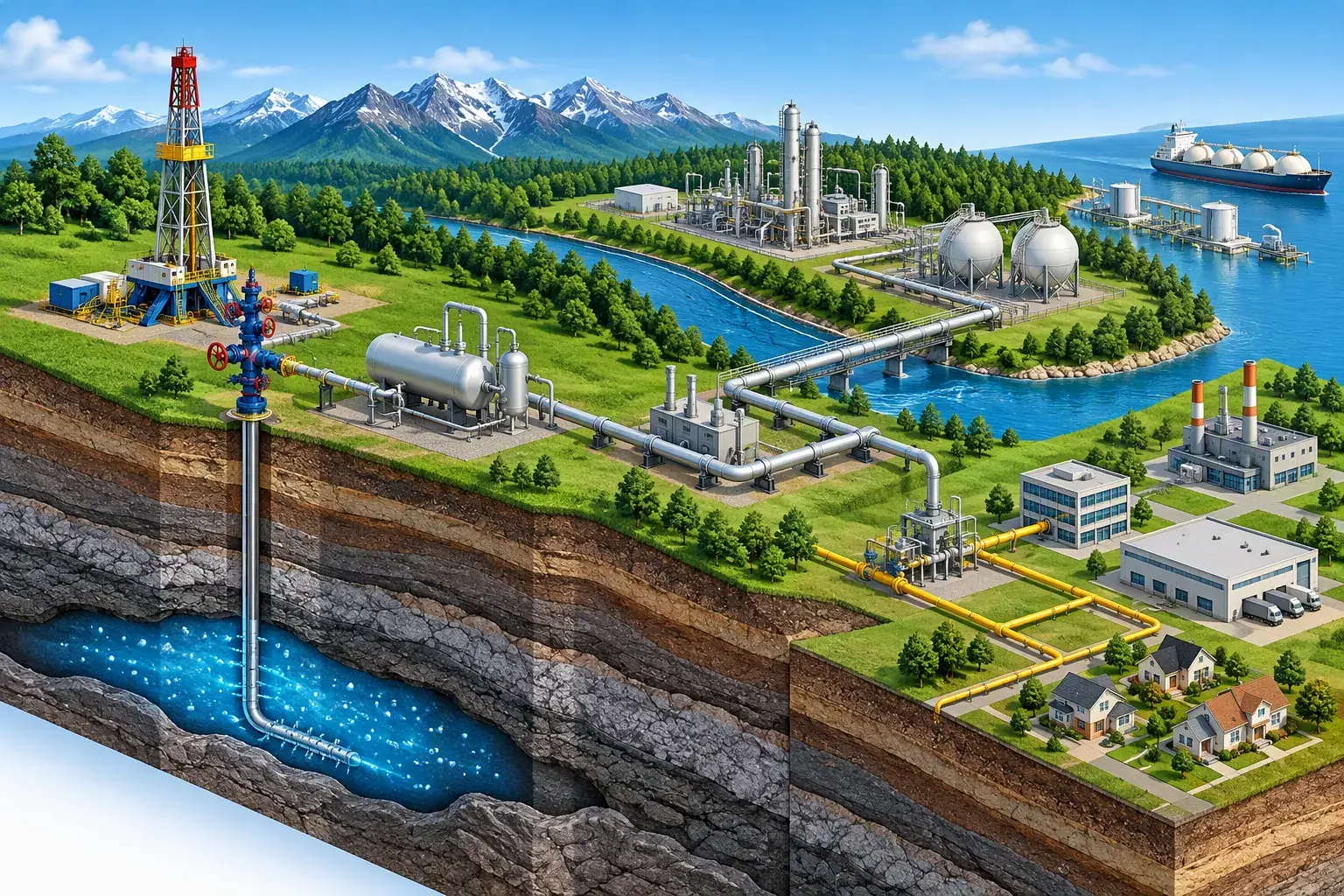
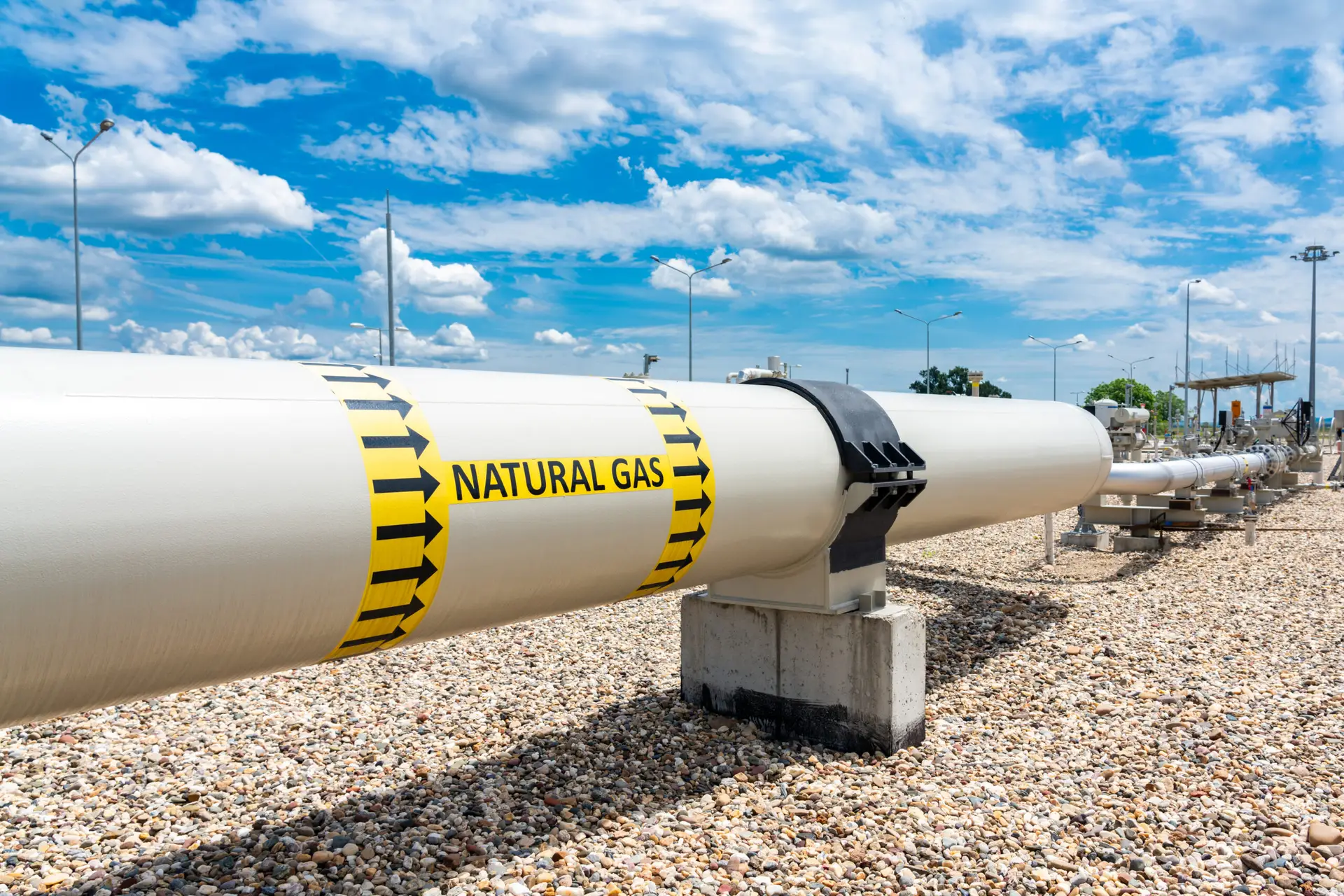
From Wellhead to Burner Tip.
What natural gas is, how it travels from deep underground to homes and industry, and why accurate sampling and measurement at every handoff keeps the business fair, safe, and compliant. Written for people new to the industry, researchers, and anyone looking for the experts.
Methane in pipeline-quality gas
Of U.S. natural gas pipelines
Odor must be detectable · 49 CFR 192.625
From the well to your burner tip
01 · Natural Gas 101
Natural gas is a naturally occurring mixture of light hydrocarbons, formed over millions of years and trapped in porous rock deep underground. Methane (CH₄) makes up most of it, with smaller amounts of ethane, propane, and heavier hydrocarbons, plus non-burning gases such as nitrogen and carbon dioxide.
In its natural state it is colorless, odorless, and lighter than air, and it burns with a clean blue flame. Because every reservoir is different, no two gas streams have exactly the same makeup, and that makeup decides how much energy the gas carries and what it is worth.
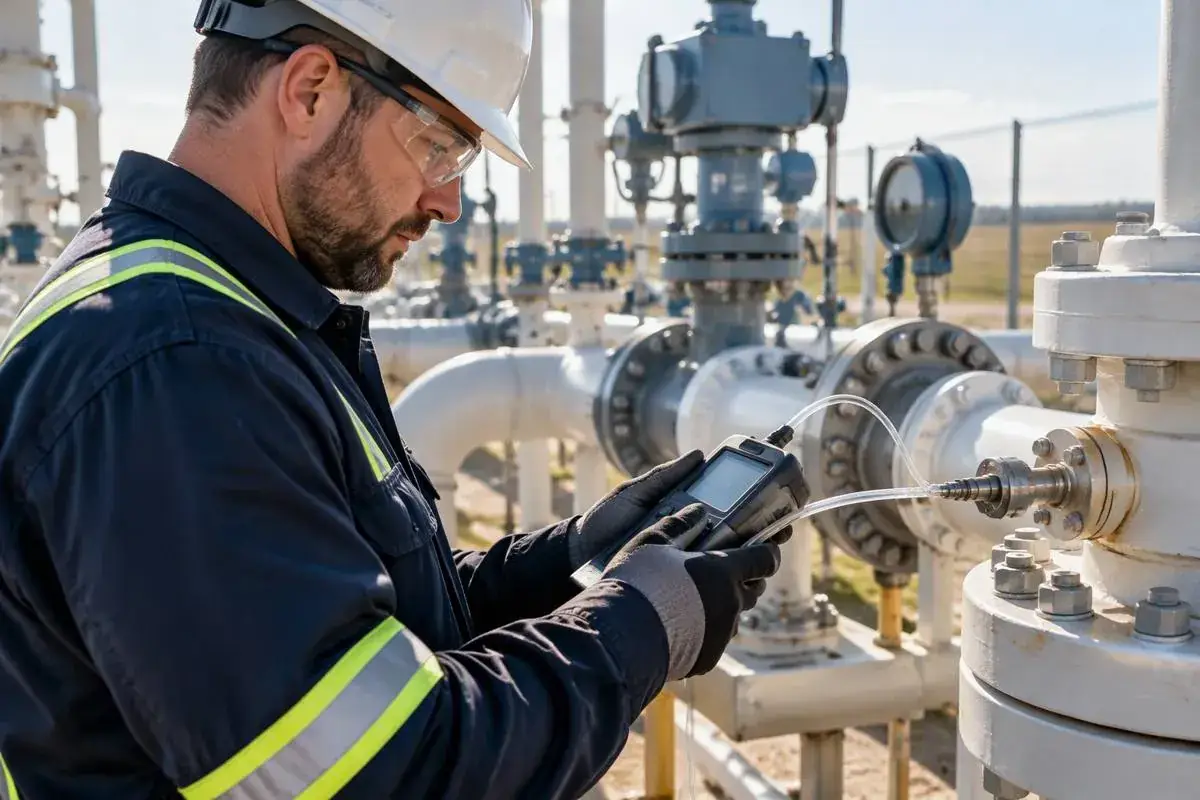
Measured at Every Handoff
By the Numbers
Gas is processed to tight limits before it enters a transmission pipeline. Even so, the share of each component shifts with the supply source, and every shift changes the heating value used for billing.
Bars show a typical value; numbers show the typical range (mole %), as published for a North American utility system. Raw gas at the wellhead can look very different.
02 · Why Measurement Matters
Every time gas changes hands, both parties must agree on exactly what was delivered. That agreement rests on representative samples and accurate analysis.
Gas is bought and sold on its energy content. At a high-volume meter, a small error in heating value adds up to real money over a billing period.
From lean pipeline gas to rich, liquids-heavy streams, the mix of methane, NGLs, CO₂, H₂S, and water changes by basin, by well, and over time.
API MPMS Chapter 14.1 and GPA 2166 define how samples are collected and handled, and gas contracts routinely reference them.
H₂S, water, CO₂, and liquids corrode pipe, foul meters, and damage compressors. Knowing what is in the stream protects the assets that move it.
Wellhead, gathering system, plant, pipeline interconnect, and city gate: each handoff is a custody transfer point with its own measurement program.
Key Standards & Regulations
API MPMS Ch. 14.1
GPA 2166
AGA Report No. 3
AGA Report No. 7 & 9
ASTM D1945
ISO 10715
49 CFR Part 192
18 CFR Part 284
03 · Supply Chain Overview
Natural gas passes through three industry segments and five major stages before it reaches a burner tip. Tap a numbered pin to jump to that stage.
Upstream · Explore & Produce
Midstream · Process & Transport
Downstream · Deliver & Use
Upstream · Exploration & Production
01
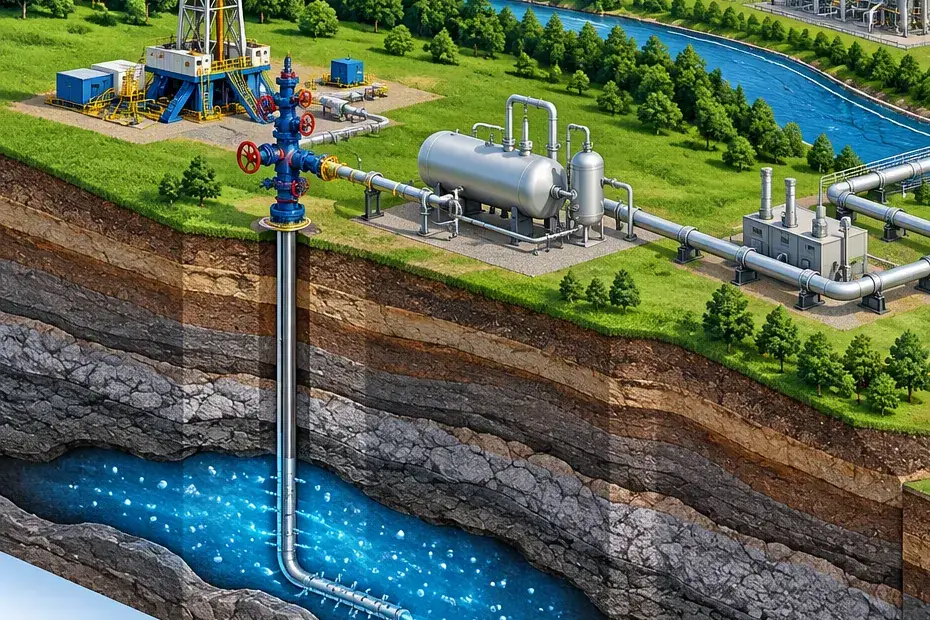
Stage 01
Upstream
Geologists locate gas-bearing rock, then crews drill and complete wells, either conventional or horizontal and hydraulically fractured in shale. Raw gas rises to the surface carrying water, liquids, and impurities, with a makeup unique to its formation.
Key Activities
Seismic surveys, drilling, completion, field separation
Products / Results
Raw natural gas, condensate, produced water
Measured here: wellhead & allocation sampling
01
Midstream · Gathering, Processing & Transport
02
Midstream
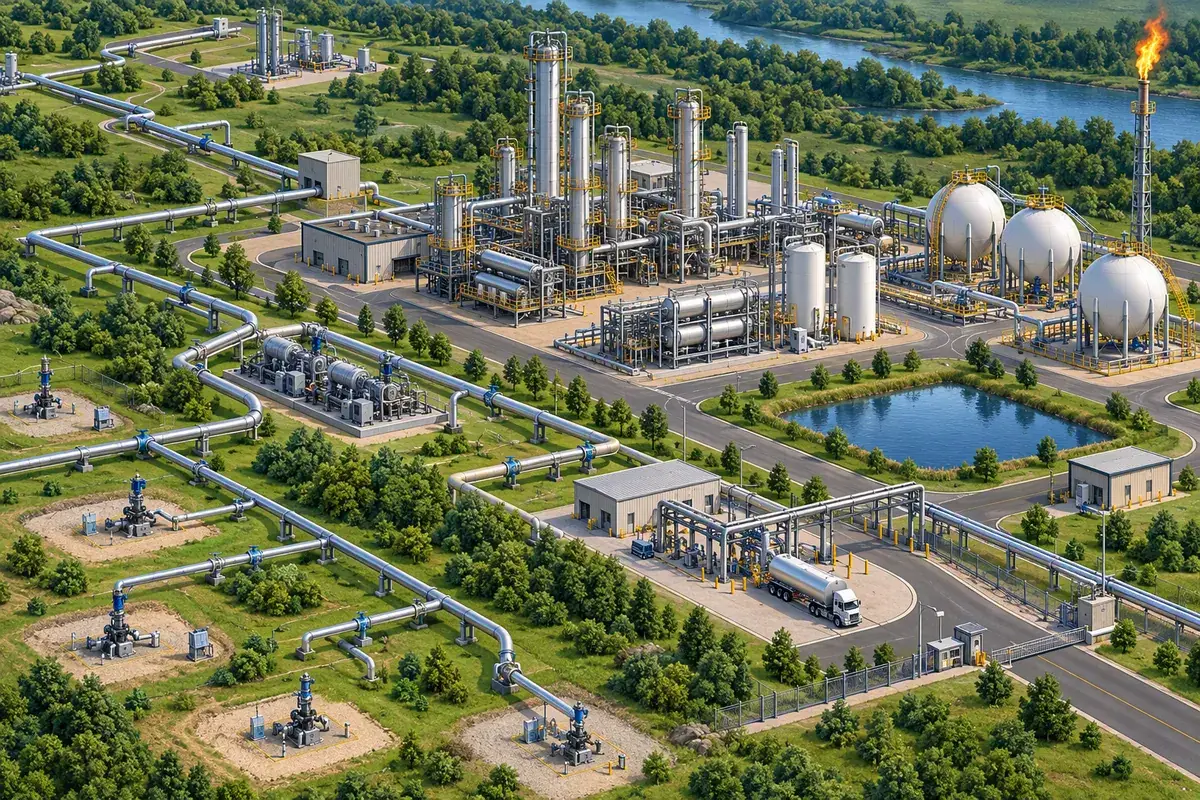
Small-diameter gathering lines carry gas from many wells to a processing plant. There, natural gas liquids are recovered and water, CO₂, H₂S, and other impurities are removed so the gas meets pipeline quality specifications.
Key Activities
Compression, dehydration, sweetening, NGL recovery
Products / Results
Pipeline-quality gas, ethane, propane, butanes
Measured here: plant inlet & outlet sampling
Stage 02
02
02
Stage 03
Midstream
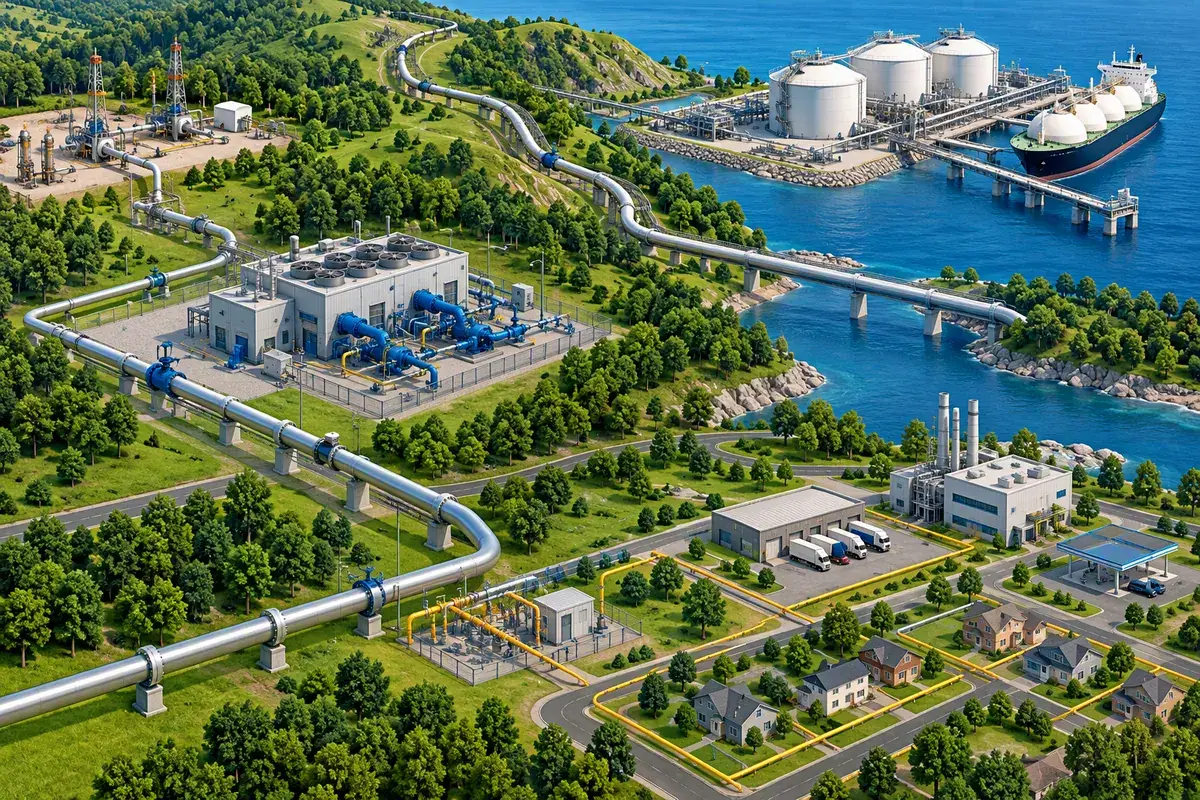
Compressor stations push processed gas through large, high-pressure transmission pipelines across states and countries. Some is held in underground storage for peak demand, and some is chilled to about −162 °C and shipped overseas as LNG.
Key Activities
Compression, interstate transport, storage, liquefaction
Products / Results
Transported gas, stored gas, LNG cargoes
Measured here: custody transfer at interconnects & terminals
03
Downstream · Distribution & End Use
02
Downstream
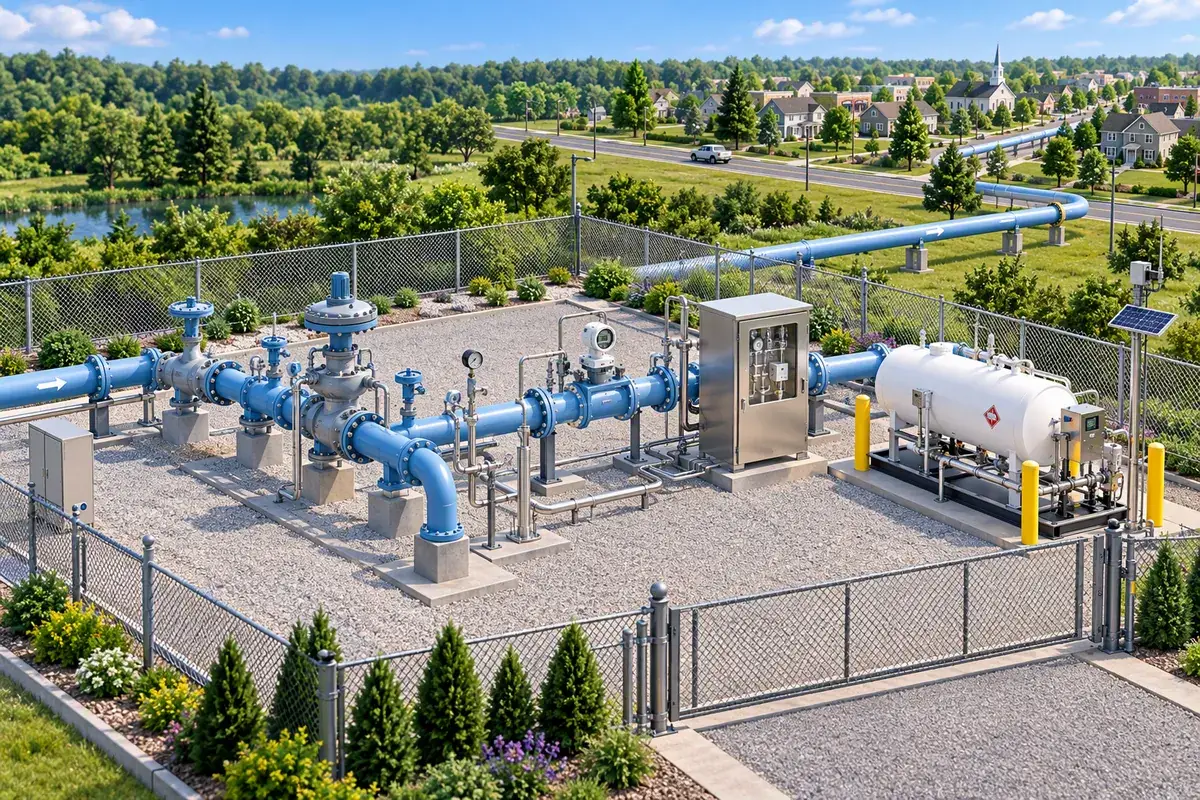
At the city gate, gas leaves the transmission line and enters a local distribution company's system. Pressure is reduced, the gas is metered for billing, and odorant is injected so a leak can be smelled.
Key Activities
Pressure regulation, metering, odorization
Products / Results
Odorized, metered distribution gas
Measured here: BTU metering & odorant verification
Stage 04
04
02
Stage 03
Downstream
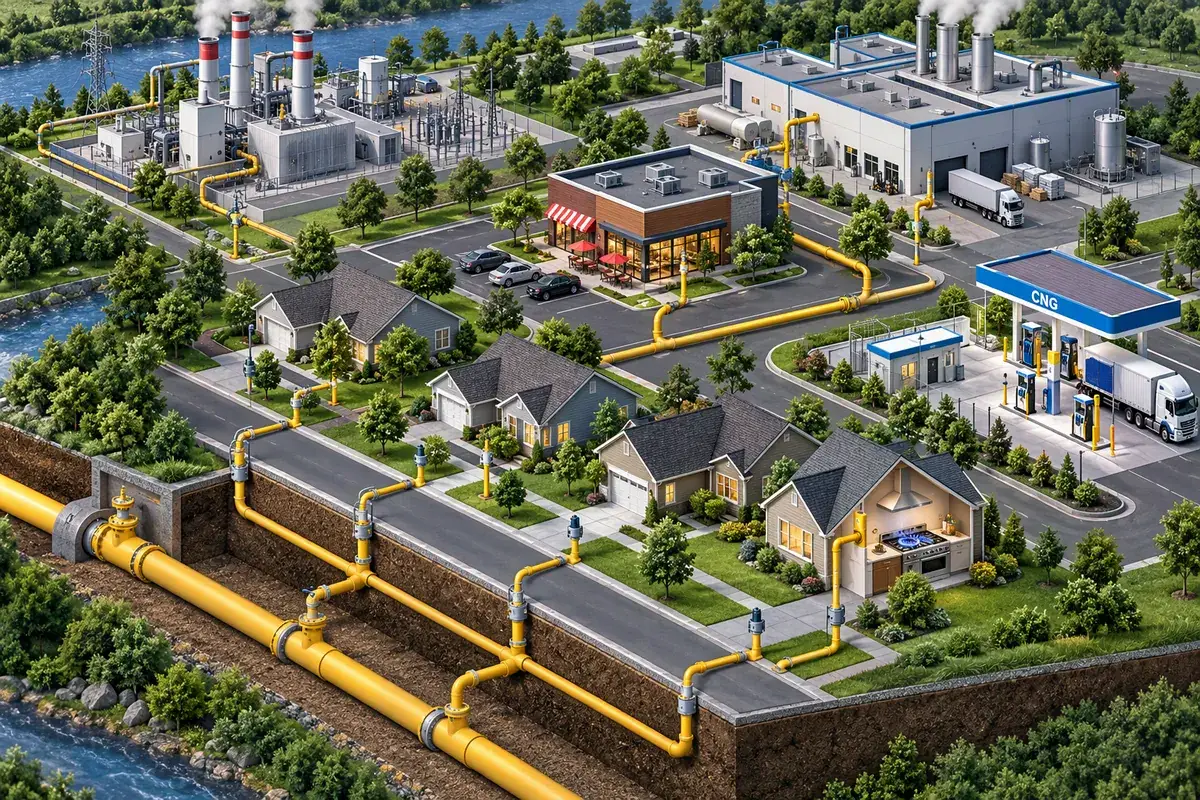
Mains and service lines deliver gas to homes, restaurants, factories, power plants, and CNG fueling stations. There it becomes heat, electricity, and vehicle fuel, or a feedstock for chemicals and plastics.
Key Activities
Distribution, leak surveys, odor-level checks
Products / Results
Heat, power, CNG fuel, chemical feedstock
Measured here: odor intensity & gas quality checks
05
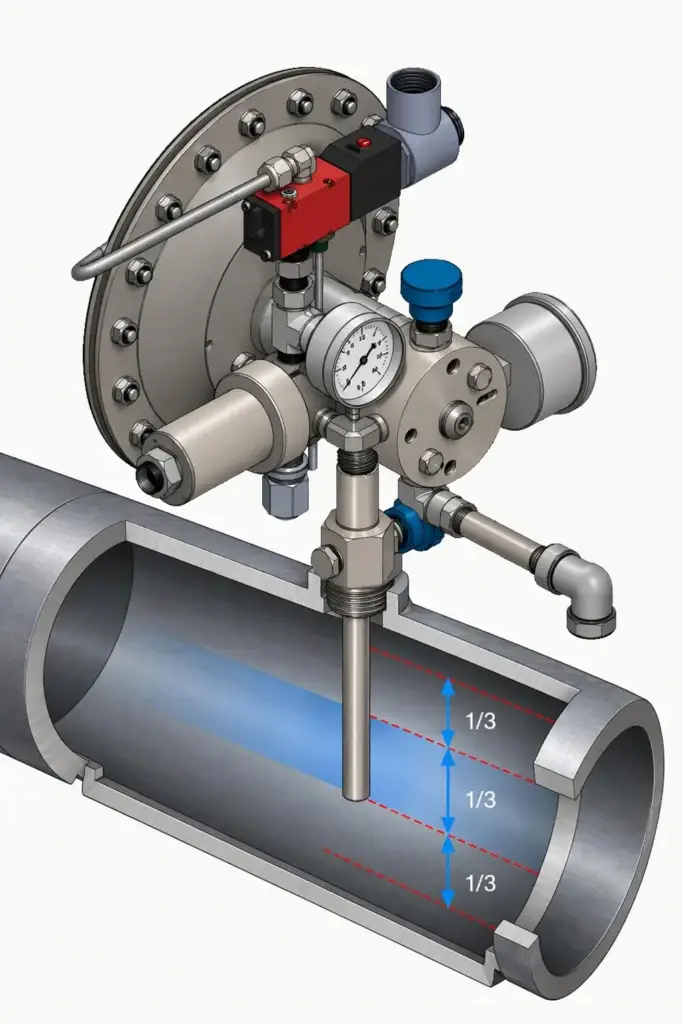
The Probe · First Contact With the Stream
04 · Measurement Science
A representative sample reflects the gas stream at the time and place it was collected, with no contamination, no phase change, and no lost heavy components on the way to the lab. Most bad samples are not caused by bad equipment. They come from procedure.
01
API 14.1 places the probe tip in the center third of the pipe, away from wall effects and pooled liquids.
02
Proportional-to-flow composite sampling builds a flow-weighted average over the billing period. Spot samples only suit stable streams.
03
If a sample cools below its hydrocarbon dew point, heavy components condense and the measured BTU value drops. Heat and constant pressure prevent it.
04
Constant pressure (floating piston) cylinders for rich or near-dew-point gas. Single cavity cylinders for clean, dry gas.
05
Stale gas left in the sample path from the last cycle must be flushed out first, or it ends up in your sample.
05 · Gas Types & Treatments
Natural gas is not one uniform product. Where it comes from, and how it is treated along the way, changes how it behaves and how it should be sampled.
By Source & Composition
Pipeline Gas
Processed pipeline gas · Mostly methane
The gas delivered to homes and businesses after processing removes liquids, water, CO₂, and sulfur. Dry, single-phase, and consistent, yet still metered and analyzed at every custody transfer.
Single cavity cylinders usually suitable
BTU still varies, so GC analysis matters
Odorant monitored through distribution
Rich Gas
Rich gas · High NGL content
Gas carrying significant ethane, propane, butane, and pentanes-plus. Near its dew point, liquid can drop out in the sample system, the leading cause of unrepresentative samples in production.
Constant pressure cylinders prevent phase change
Heated sample systems near the dew point
High-value stream, so errors are costly
Corrosive
H₂S & CO₂ · Highly corrosive
Gas containing hydrogen sulfide and/or carbon dioxide. H₂S is toxic and corrosive, so it demands compatible materials, sealed handling, and strict safety practices at any concentration.
H₂S-compatible wetted materials
H₂S can adsorb on surfaces and skew results
Strict PPE and gas-detection practices
Fractured Shale
Tight formations · Variable composition
Produced from shale with horizontal drilling and hydraulic fracturing. Some plays yield dry methane, others liquids-rich gas, and composition can shift quickly as a well ages.
Frequent analysis for changing composition
Liquids-rich plays need wet gas equipment
Sampling frequency follows production decline
Non-Traditional
Coalbed methane · Tight sands · Biogenic
Gas from coal seams, tight sandstones, and biogenic sources. It is often low pressure and water-saturated, with a composition that differs from conventional fields.
Water handling upstream of sampling
Low-pressure streams need careful design
Oxygen in biogenic gas needs extended analysis
Treated & Blended Gas Streams
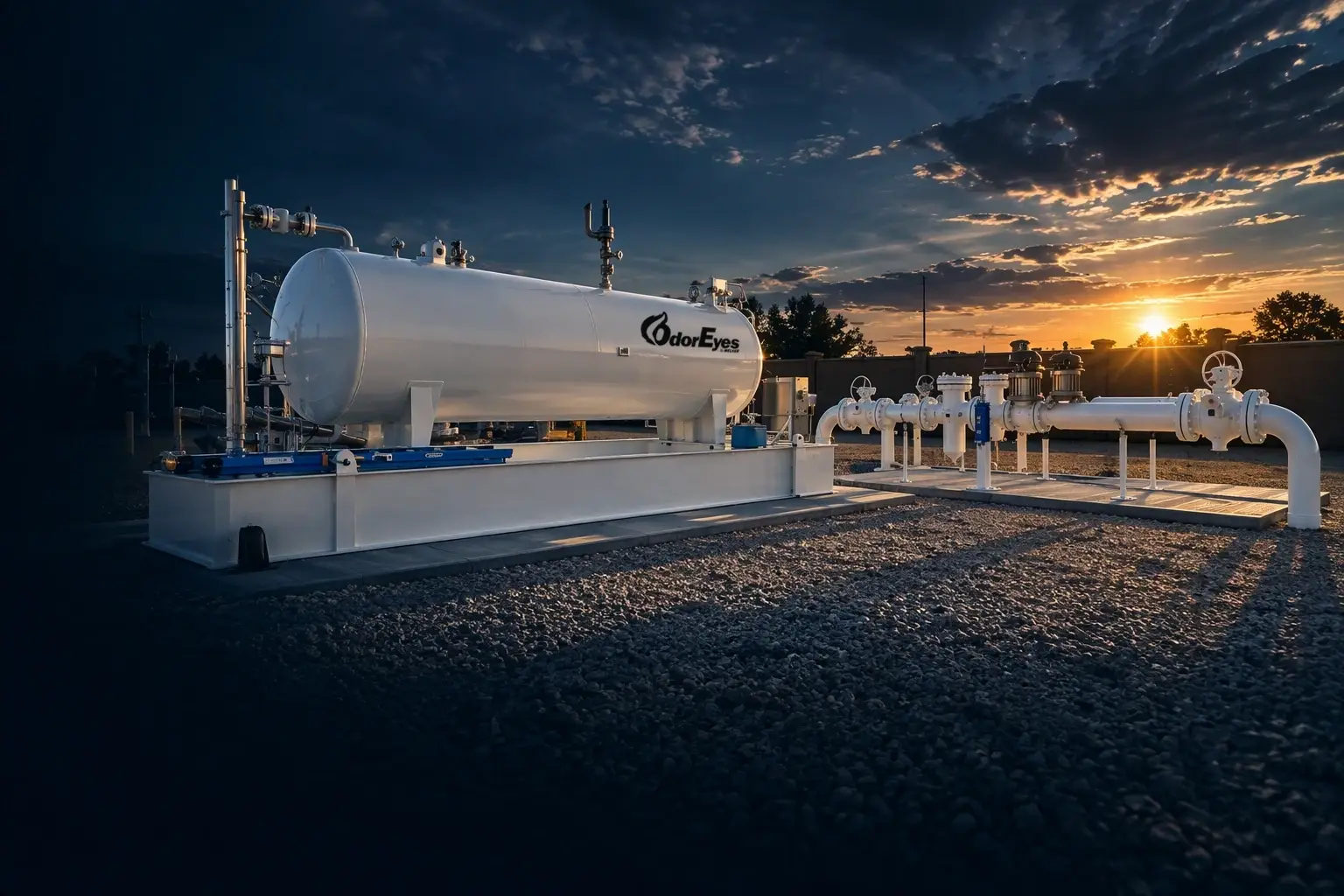
Safety odorants · Mercaptans & THT
Natural gas has no smell of its own, so odorant is injected for leak detection. Federal rules require distribution gas to be readily detectable at one-fifth of the lower explosive limit.
49 CFR 192.625 sets the detection threshold
Odorant fade in new pipe and soil needs monitoring
Flow-proportional injection avoids over and under odorizing
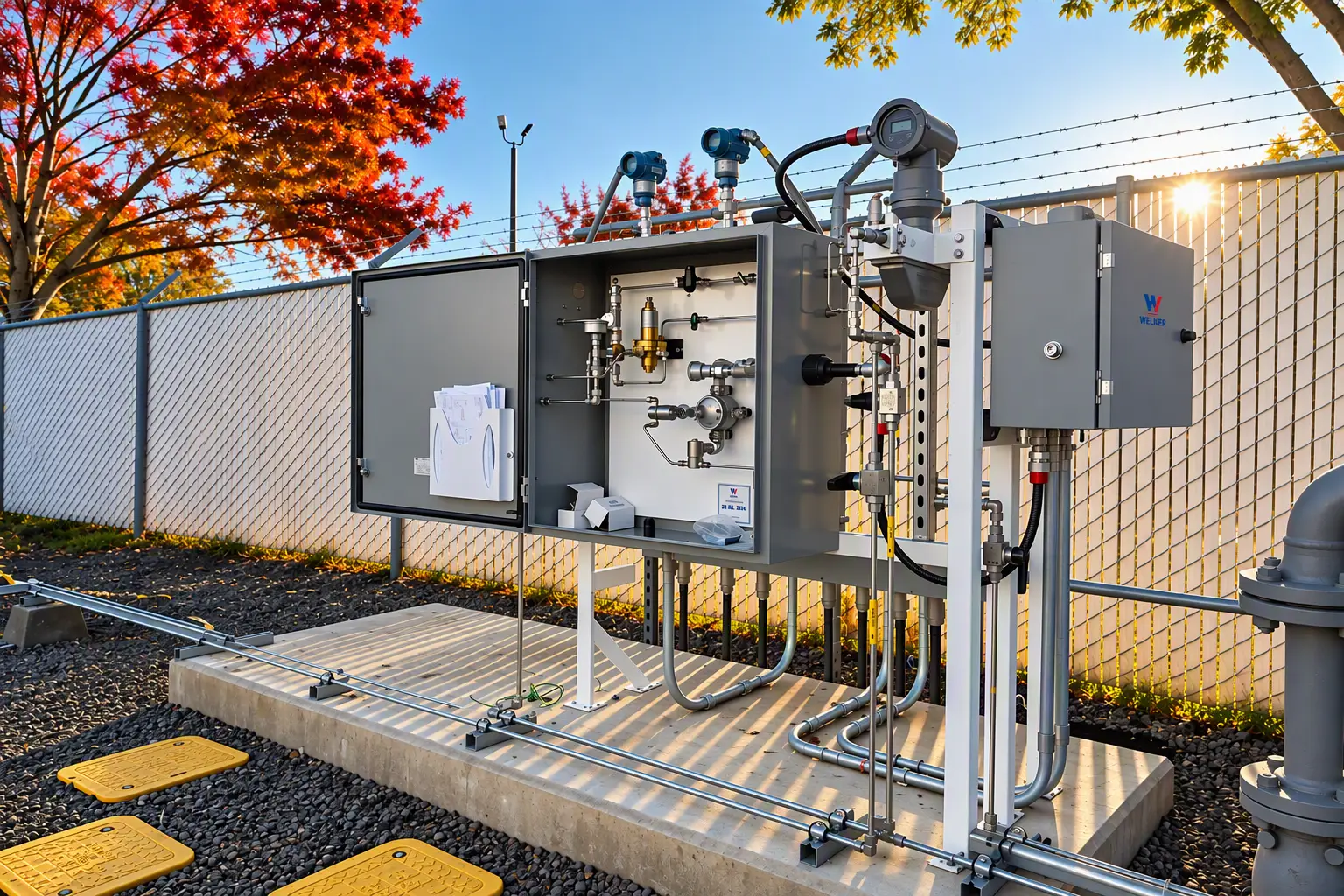
Hydrogen blending · Lower-carbon gas
Hydrogen can be blended into natural gas and carried through existing pipelines to make heat and power with lower emissions. Safe blend limits depend on pipeline materials, equipment, and end-use appliances, so every project is different.
Blending lowers heating value per cubic foot
Proportional-to-flow injection keeps the blend steady
Gas analysis verifies the delivered blend
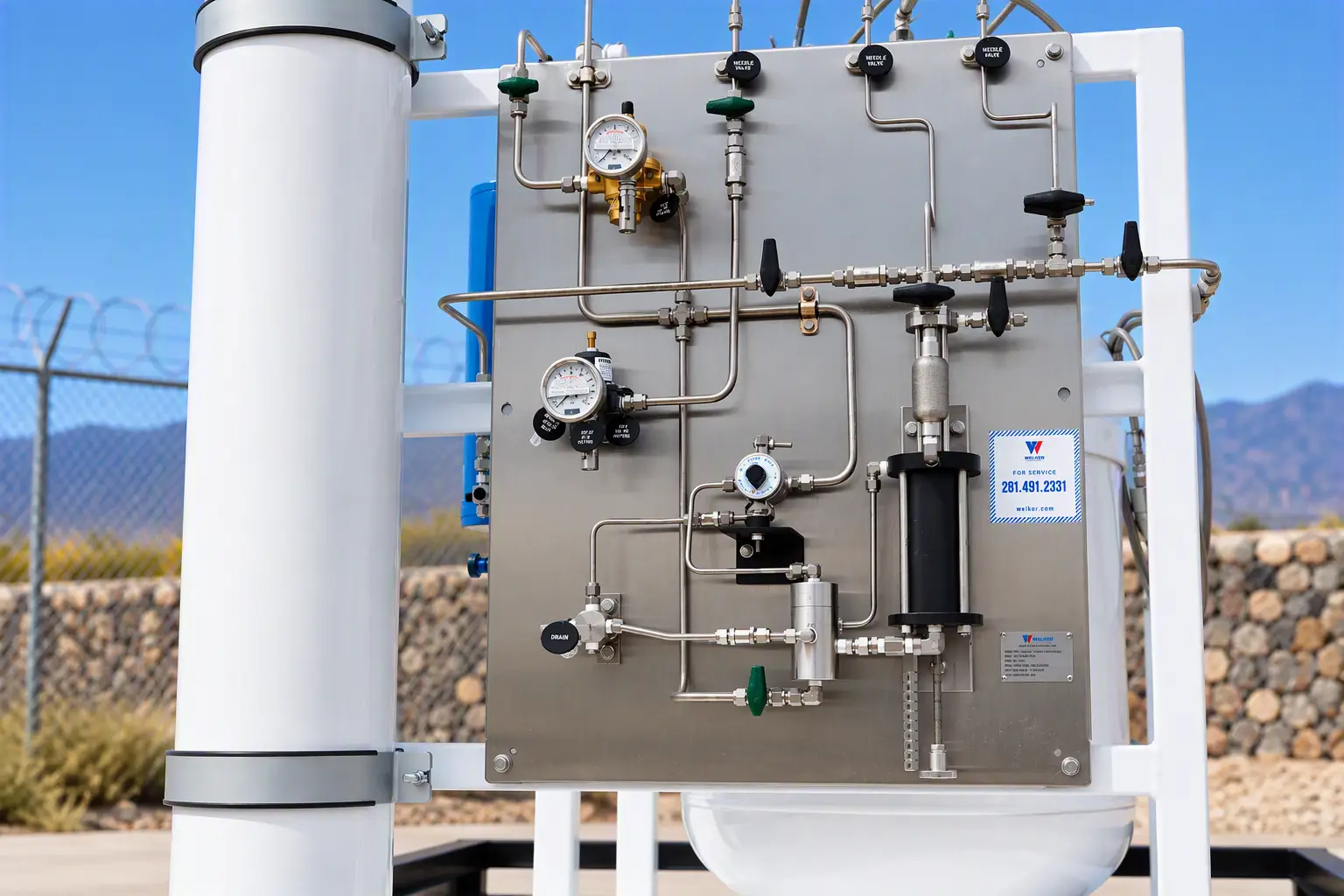
Hydrate prevention · Cold-weather flow
Water in gas can combine with light hydrocarbons to form ice-like hydrates that plug lines, valves, and regulators, especially at pressure cuts and in cold weather. Injected methanol lowers the freeze point of free water and keeps gas moving.
Highest risk upstream of pressure reductions
Proportional-to-flow avoids over or under treating
Common at wellsites, gathering, and cold climates
06 · Sampling Methods & Equipment
Gas composition, flow variability, pressure, temperature, and the governing standard all shape which method and equipment fit a measurement point.
Preferred for Custody Transfer
A composite sampler takes small grabs on a time or proportional-to-flow basis and collects them in one cylinder over the billing period, typically a day to a month. The result is a flow-weighted average of everything that passed the meter.
Flow-weighted average
Unattended operation
API 14.1 & GPA 2166 methods
Stable Streams
A single grab of the stream, collected manually or with an automated spot sampler. Faster and simpler, and best for operational checks, troubleshooting, and stable, well-characterized gas.
Quick operational insight
Portable for field use
Rich & Wet Gas
A floating piston holds the sample at line pressure from collection to the lab, so heavier components stay in the gas phase. The go-to container for rich gas and gas near its dew point.
Holds line pressure
Prevents phase change
Clean, Dry Gas
DOT-rated, fixed-volume cylinders for clean, dry, single-phase gas well below its dew point. Economical and simple, but not suited to rich or near-dew-point streams.
Most economical option
Dry, single-phase gas only
Cold Climates
Heated enclosures and heat-traced tubing keep the whole sample path above condensation temperature. Essential in cold climates and on rich gas, where brief cooling causes liquid dropout.
Keeps the path above dew point
Cold-weather reliability
07 · Standards & Compliance
Industry standards and federal rules define acceptable methods, equipment, and documentation. Knowing which ones apply to a measurement point is the first step in designing a compliant program.
API MPMS Ch. 14.1
Collecting and handling natural gas samples for custody transfer: probe placement, purging, cylinders, and transport.
GPA 2166
Obtaining natural gas samples for analysis by gas chromatography, often cited alongside API 14.1 in gas contracts.
AGA Report No. 3 / API 14.3
Orifice metering of natural gas, the calculation method behind many custody transfer meters.
49 CFR Part 192
Federal pipeline safety rules, including the odorization requirement in §192.625.
08 · Industry Glossary
Hover or tap a card to flip it.
Term
British thermal unit, the energy measure used to value gas. Pipeline gas carries roughly 1,000 BTU per standard cubic foot.
Term
The point where gas changes ownership. Sampling and metering there set what the buyer pays.
Term
The temperature at which heavier hydrocarbons start to condense. Samples must stay above it.
Term
Natural gas liquids: ethane, propane, butanes, and pentanes-plus recovered at processing plants.
Term
Composite sampling that takes more grabs when flow is high, producing a flow-weighted average.
Term
An ice-like solid of water and light hydrocarbons that can plug lines. Methanol injection helps prevent it.
Term
Heating value divided by the square root of specific gravity. It shows whether two gases burn interchangeably.
Term
Lower explosive limit: the lowest gas-in-air concentration that can ignite, roughly 4–5% for natural gas.
09 · Frequently Asked Questions
The questions our application engineers hear most from operators, engineers, and procurement teams who are new to natural gas measurement.
10 · The Welker Approach
Welker Natural Gas Solutions
Since 1954, Welker has designed, manufactured, and tested natural gas sampling, conditioning, odorization, and injection equipment in Sugar Land, Texas. Our application engineers match the right equipment to each stream and site, from a single probe to a complete turnkey system.
Since 1954
Designing & building
ISO 9001:2015
Certified manufacturing
API 14.1
Compliant sampling systems
90+
U.S. patents
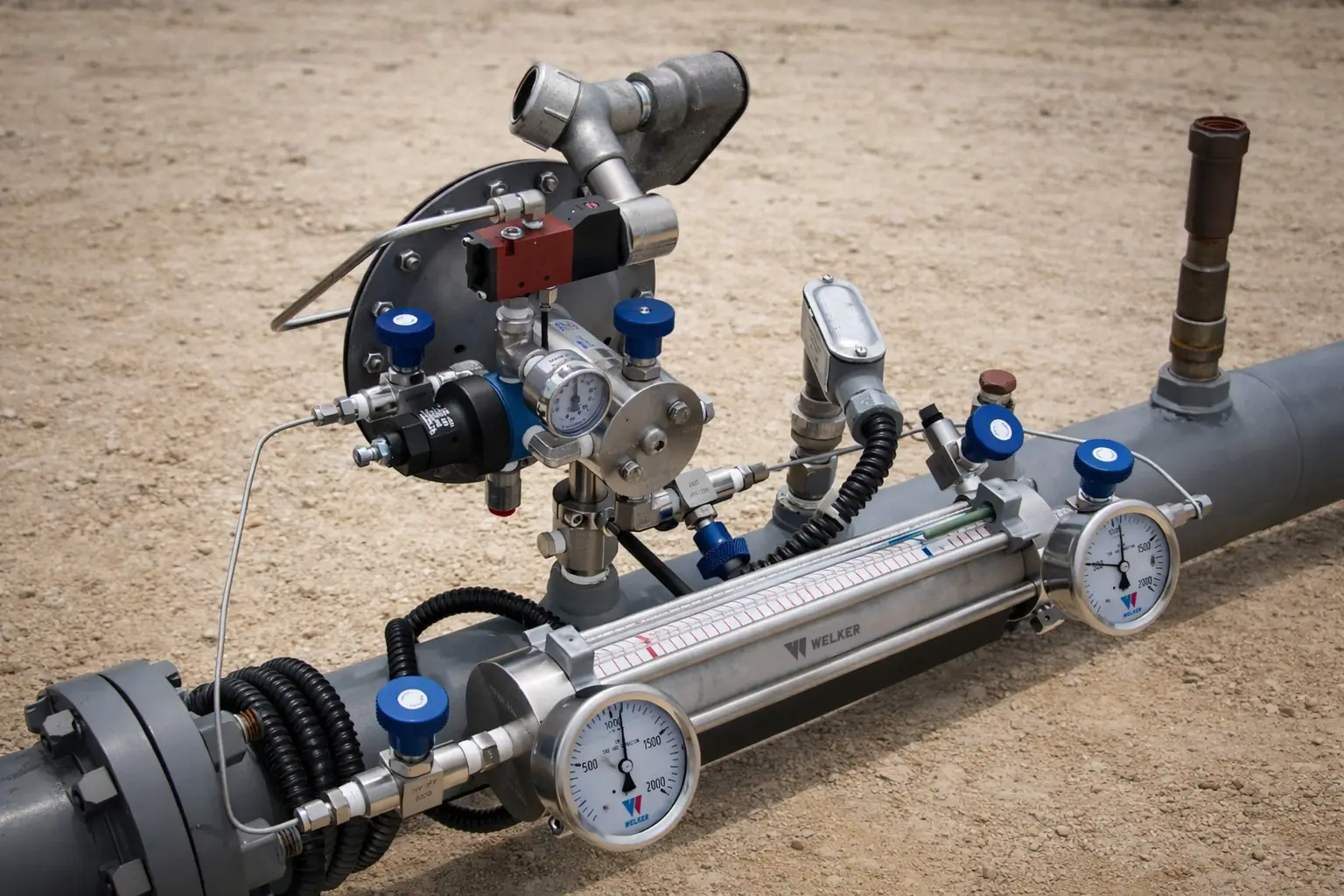
Welker Made™ · Sugar Land, TX
Whether you are specifying a new custody transfer point, troubleshooting an existing system, or still learning the basics, Welker's application engineers are glad to help.
Other Process Fluids
Crude Oil Refined Products LNG & CNG Light Liquids Petrochemical All Process Fluids